Why Are These Case Studies Labeled as Illustrative?
Presenting a fabricated client story with invented names or specific addresses as if it were a real, verified account would be dishonest. These case studies are illustrative, built from the kinds of situations that come up repeatedly in this region, and labeled clearly so there’s no ambiguity about what you’re reading.
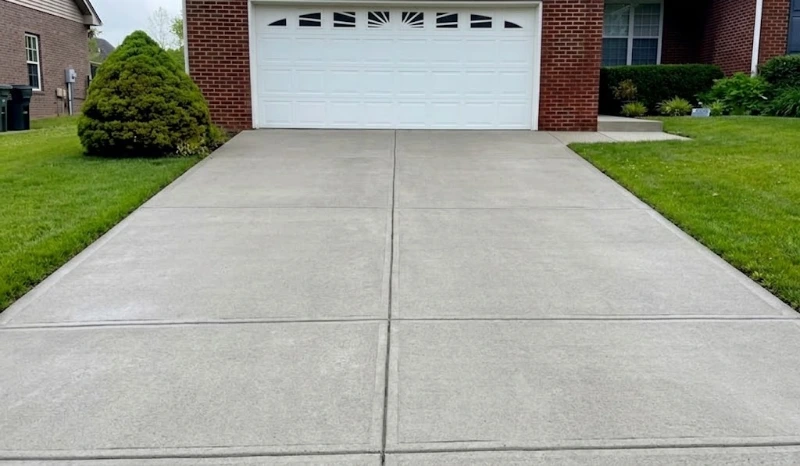
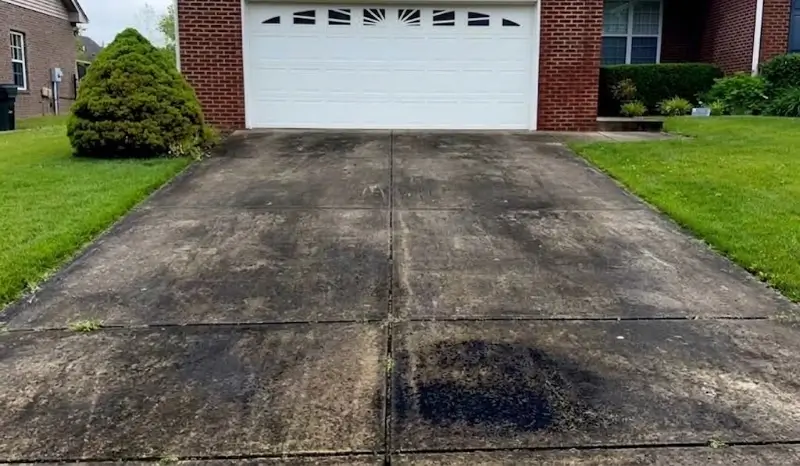
Red Clay Staining on a Concrete Driveway
The Situation
A homeowner reaches out after noticing the driveway seems to darken again within a few months of a previous cleaning attempt with a rented machine. The staining runs heaviest near the street-facing edge and fades toward the garage, and it has a faint reddish undertone that does not look like typical mildew.
What the Walkthrough Found
The property sits along an unpaved farm access road, and every vehicle pass kicks up a fine red clay dust that settles into the concrete’s pores. Mixed with organic buildup from nearby tree cover, the clay binds to the surface instead of rinsing away with rain, which is why a garden hose and a rented electric washer never fully cleared it.
The Approach
A gas pressure washer paired with a rotary surface cleaner covers the full driveway evenly, avoiding the striping a wand alone tends to leave on concrete. A concrete-safe detergent breaks down the clay-and-organic mix before rinsing, working section by section from the garage down to the street.
The Result
The driveway returns to its original gray tone in a single visit. Given the ongoing dust exposure, a twice-yearly recurring cleaning gets discussed and scheduled, timed around the dry season when dust from the access road is heaviest.
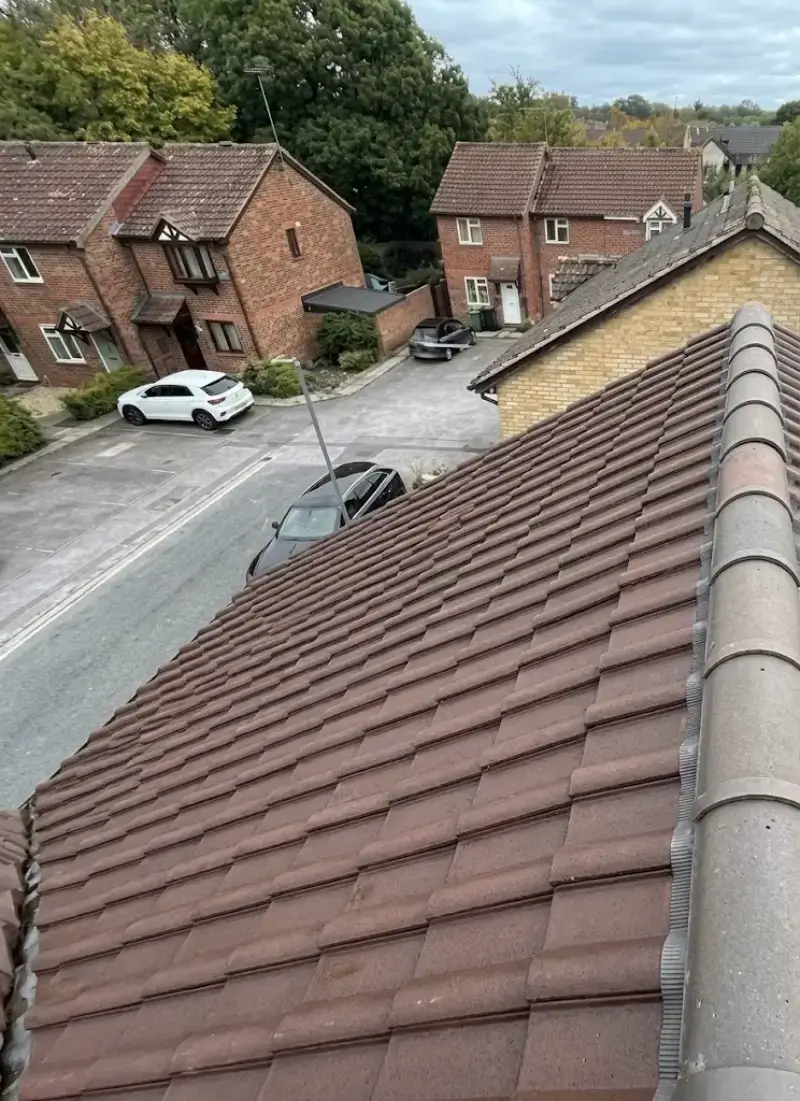
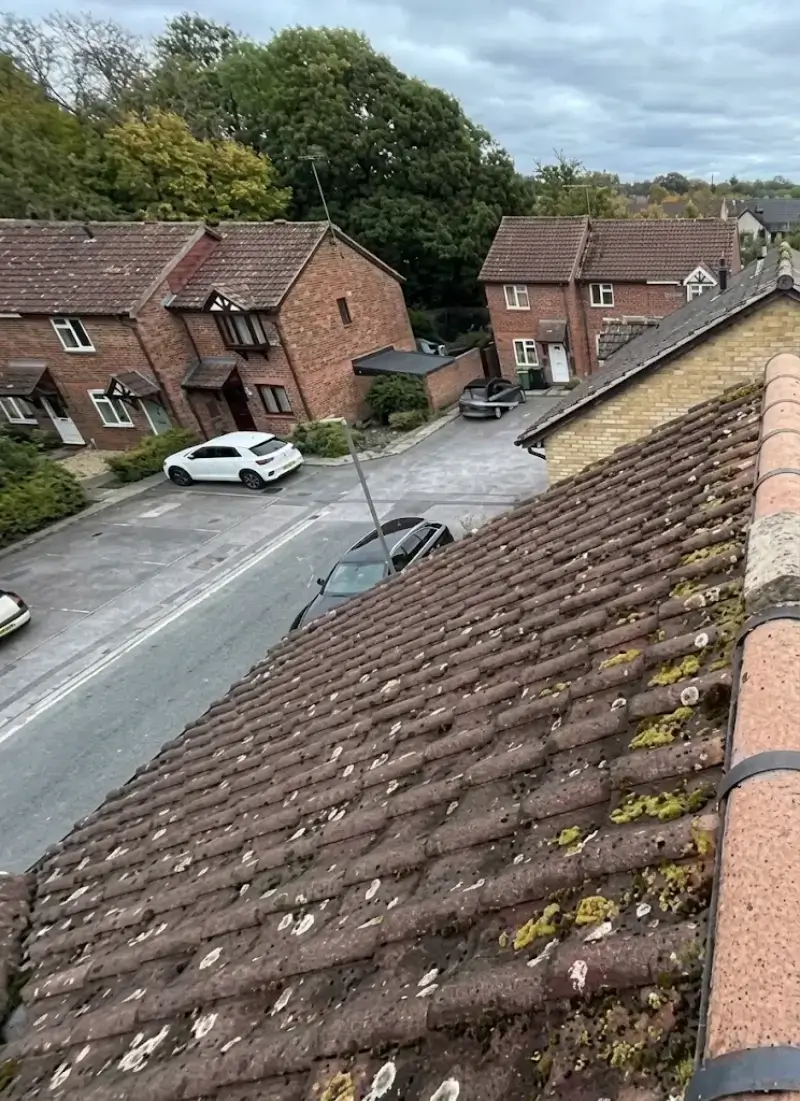
Algae Streaking on an Oak-Shaded Roof
The Situation
The homeowner is worried the roof is failing after seeing dark streaks spread across the north-facing slope over the past year, and a neighbor mentioned it might need replacing.
What the Walkthrough Found
The streaking is Gloeocapsa magma, an algae common on asphalt shingles in Florida’s humidity, feeding off the limestone filler in the shingles themselves. The oak canopy keeps that section of roof shaded and damp longer after rain than the rest of the house, which is exactly the condition the algae needs to keep spreading. The shingles underneath are structurally sound.
The Approach
Pressure washing gets ruled out immediately since direct high-pressure spray on asphalt shingles strips granules and shortens the roof’s life. Instead, a low-pressure soft wash applies a cleaning solution formulated to kill the algae at the root, left to dwell before a gentle rinse clears it from the surface.
The Result
The streaking lifts within the same visit, and because soft washing kills the organism rather than just rinsing the stain, the roof does not show the same regrowth within weeks that a pressure-washed or DIY-treated roof often does. No shingle granules end up in the gutters afterward.
A Commercial Plaza Before a Lease Renewal
The Situation
A property manager needs the plaza looking presentable ahead of lease renewal walkthroughs with several tenants, on a timeline that cannot disrupt business hours.
What the Walkthrough Found
Three distinct problems across one property: oil staining and gum buildup across the parking lot, grime streaking down the stucco storefront facades, and a dumpster enclosure with grease buildup and an odor tenants had complained about. Each surface needs a different chemical approach, and the dumpster pad work falls under local wastewater containment rules.
The Approach
The job gets scoped as three separate lines of work rather than one blanket quote: parking lot degreasing and surface cleaning scheduled before opening hours, stucco soft washing done mid-morning once foot traffic is lighter, and dumpster pad cleaning with a containment mat to catch wastewater on-site rather than letting it run toward a storm drain, keeping the work compliant with Hillsborough County’s runoff rules.
The Result
All three areas are completed within a single day with no interruption to tenant operations, and the property manager receives before-and-after documentation for each area to keep in the lease renewal file.
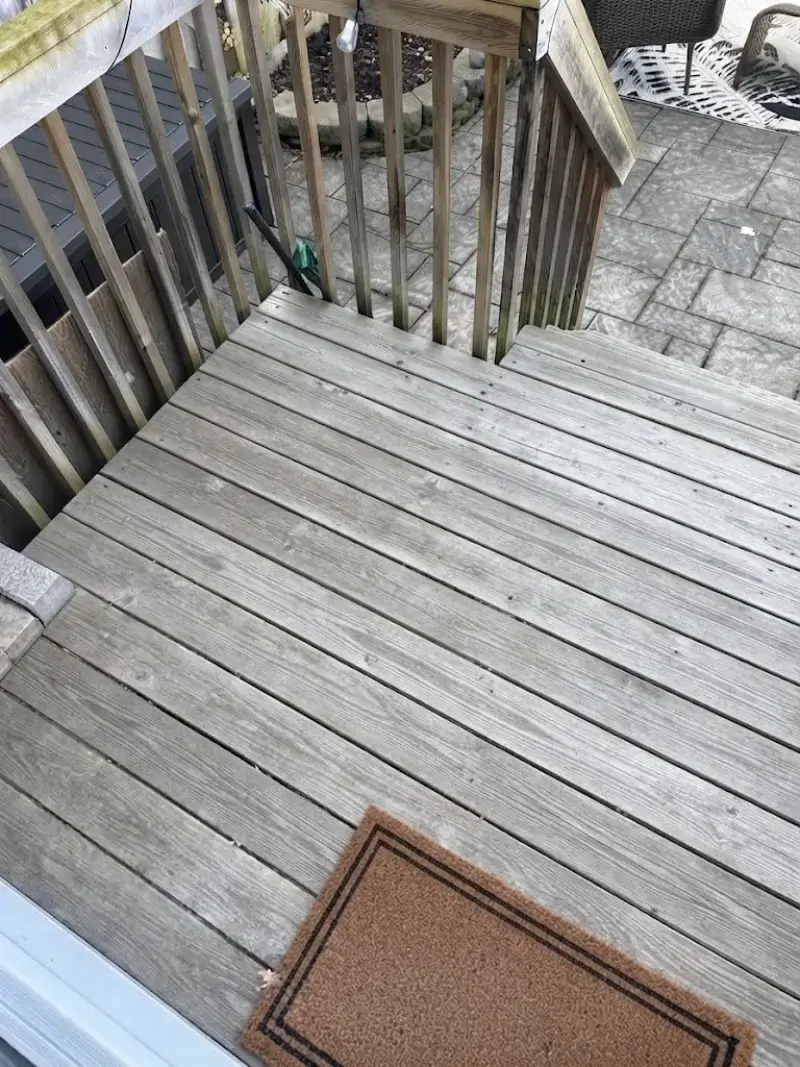
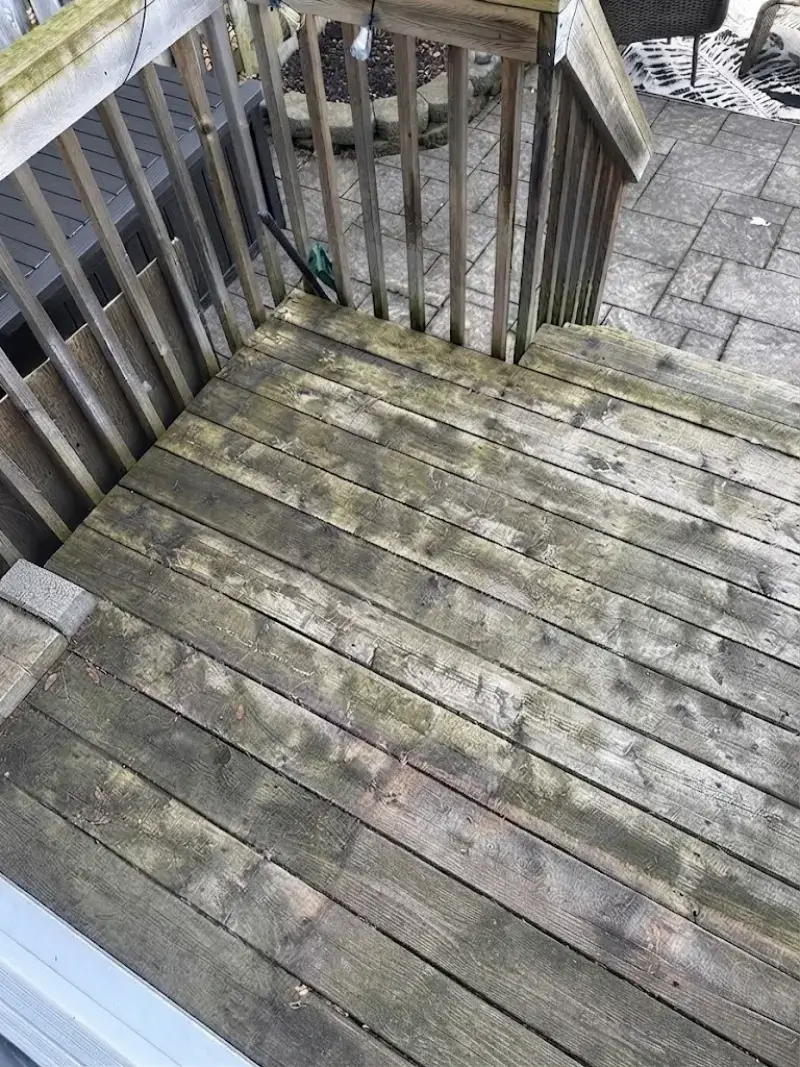
A Wood Deck With Gray, Weathered Boards
The Situation
The homeowner is planning to replace the deck boards entirely, assuming the graying means the wood underneath has deteriorated beyond saving.
What the Walkthrough Found
The gray tone is UV oxidation sitting on top of otherwise sound pressure-treated pine, worsened by a layer of mildew in the shaded corner near the house. A few boards show minor surface roughness from age, but nothing structural. Full replacement was not necessary yet.
The Approach
A low-pressure soft wash with a wood-safe cleaning solution lifts the mildew and oxidized surface layer without raising the wood grain or forcing water into the seams between boards, which is the usual cause of splintering when a deck gets blasted with a straight pressure washer instead.
The Result
Most of the deck’s original tone comes back in one visit. A wood sealer gets recommended and scheduled as a follow-up once the deck fully dries, to slow the next round of graying and buy more time before boards genuinely need replacing.
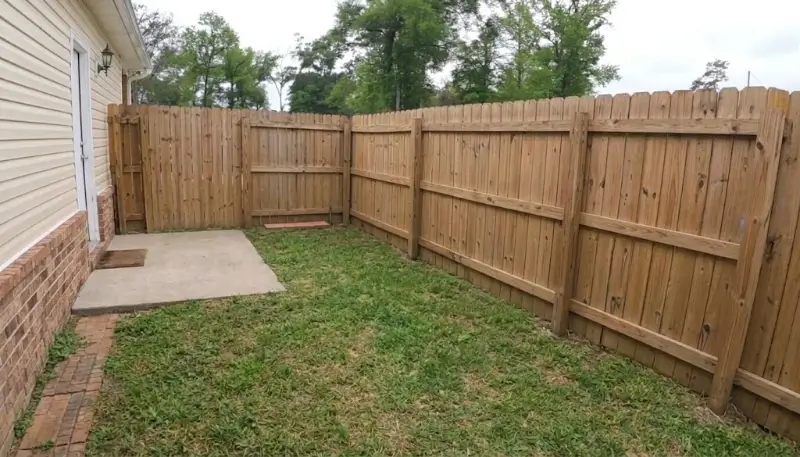
A Fence Line With Uneven Weathering
The Situation
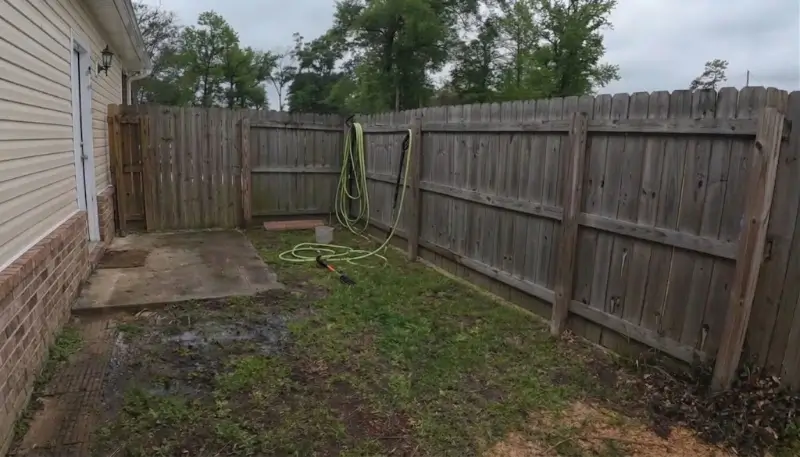
The homeowner assumes the neighbor is neglecting their side of a shared fence line, since one side looks noticeably darker and dirtier than the other.
What the Walkthrough Found
The darker section sits closer to a downspout with a drainage pattern that keeps that stretch of fence damp longer after every rain, encouraging mildew growth regardless of who maintains it. It is a moisture problem, not a neglect problem.
The Approach
The heavier mildew section gets a full-strength soft wash treatment with a longer dwell time, while the drier, lighter side gets a gentler pass, since applying the same intensity across the whole fence would either under-treat one side or risk unnecessary wear on the other.
The Result
Both sections come back to a matching, even tone in one visit. Redirecting the downspout gets mentioned as a longer-term fix, since the drainage pattern will otherwise keep encouraging mildew back to that section faster than the rest of the fence line.
A Pool Deck Too Slick to Walk On Barefoot
The Situation
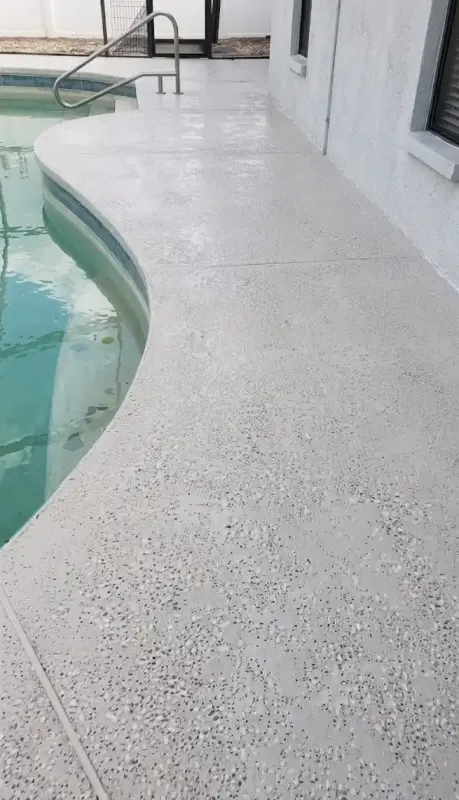
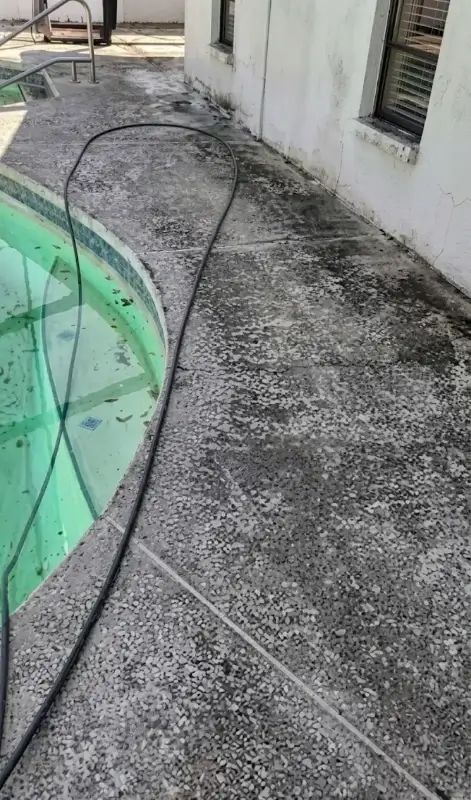
A family with young kids notices the pool deck has become slick enough near the shaded end that walking barefoot after a swim feels unsafe.
What the Walkthrough Found
Algae has taken hold in the paver joints on the shaded side of the screen enclosure, where standing humidity rarely fully dries out between pool days. Blasting the pavers at full pressure would have been the fastest-looking fix, but it also would have stripped the joint sand holding the pavers in place.
The Approach
A joint-safe low-pressure clean, working the shaded and sun-exposed sections separately since the algae buildup is uneven across the deck, lifts the slick film without disturbing the paver joints or the screen enclosure just above the work area.
The Result
The deck surface returns to a safe, matte finish the same day, with the joint sand fully intact. A lighter, more frequent cleaning interval for the shaded section gets suggested, since that side will keep collecting algae faster than the rest of the deck regardless of season.
Case Study Themes at a Glance
| Situation | Underlying Cause | Method Used |
|---|---|---|
| Darkening concrete driveway | Red clay dust plus organic buildup | Pressure washing, rotary surface cleaner |
| Streaking on shaded roof | Algae thriving in shade and moisture | Soft washing, low pressure |
| Multi-surface commercial plaza | Mixed materials needing distinct scopes | Segmented scope across three surfaces |
| Weathered gray deck boards | UV oxidation and mildew, not structural damage | Soft wash and brightening, optional sealing |
| Slick, algae-covered pool deck pavers | Standing humidity in a shaded enclosure section | Joint-safe low pressure, section-matched |
What Do These Case Studies Have in Common?
Every case study starts with a walkthrough identifying the actual cause of a problem, not just its symptom, and ends with a method matched specifically to the surface material. That pattern is the same process applied on every job regardless of scope.
How Do These Help Me Set a Realistic Budget?
Seeing how a job gets broken into distinct scopes gives a more realistic sense of what a written scope looks like than a single flat number ever could, so the scope you eventually receive contains fewer surprises.
Does Your Property Match One of These Scenarios?
A walkthrough will confirm the specifics for your actual property, since materials, exposure, and severity vary even within a similar-sounding problem, and the before and after gallery shows what that kind of result actually looks like.
Frequently Asked Questions
Are these case studies based on jobs that actually happened?
They’re illustrative scenarios built from patterns that come up repeatedly in this type of work in this region, not accounts tied to a specific verified client, and they’re labeled that way throughout this page.
Why not just describe real jobs with the client’s permission?
Illustrative scenarios let common situations be described clearly and consistently without needing to manage what details a specific client is comfortable sharing publicly, while still reflecting accurate methods and reasoning.
Does my property need to match one of these exactly?
No, these scenarios illustrate common patterns, but every property gets its own walkthrough regardless of how closely it resembles a listed case study.
Can I request a walkthrough that specifically evaluates for one of these situations?
Yes, mentioning a specific concern when you reach out helps focus the walkthrough, though every walkthrough still assesses the full scope of what’s actually present.
Why does the roof case study rule out pressure washing entirely?
Asphalt shingles can lose their protective granules under direct high-pressure spray, which shortens roof life, which is why soft washing is the appropriate method for that surface.
Do commercial case studies always involve multiple surfaces at once?
Not always, but commercial properties often have more surface variety in one location than a typical residential property.
Is a recurring schedule always recommended after a case like the driveway example?
A recurring schedule is recommended when the underlying cause is likely to keep producing the same staining pattern, though a one-time cleaning is still a valid option.
How do I know which method applies if my situation doesn’t match any case study?
A walkthrough is what determines the appropriate method for any property, whether or not the specific situation resembles one of the illustrative examples here.